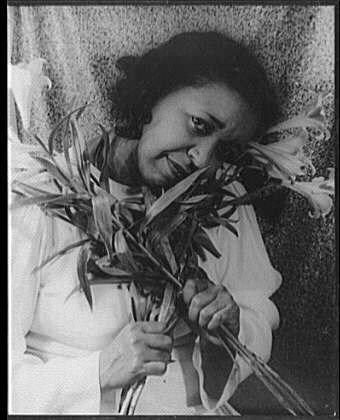
A transformative force in the history of American music, Billie Holiday redefined the vocal parameters of jazz and popular song through her unparalleled emotional depth, rhythmic sophistication, and genius for improvisation. Lacking the booming vocal power of her contemporaries, Holiday used her voice with the technical nuance of a jazz instrumentalist, manipulating time and phrasing to draw deep emotional truths from any lyrical line. Her fiercely independent artistic spirit and vulnerable delivery left a permanent mark on generations of vocalists, securing her status as an enduring cultural icon who laid bare the joys and devastating heartbreaks of the human experience.
Billie Holiday’s life is the stuff of jazz legend. She rose from poverty and abuse to become one of the biggest stars of jazz during the Thirties and Forties. Holiday was a great singer who did not possess a great voice. She employed her voice like a horn player would his horn and had a reputation for taking mediocre songs and transforming them into greatness. Her singing style was influenced by Bessie Smith’s singing and Louis Armstrong’s trumpet playing. Fellow jazz musicians referred to her as simply “Lady Day.”
Holiday was born in Baltimore, Maryland, in 1915. In 1933, she was discovered by the legendary John Hammond, talent scout extraordinaire. Hammond signed her to Columbia Records, and she recorded for some of the company’s subsidiary labels.
Despite being offered only mediocre material to record, she was supported by some of the finest musicians in jazz, including pianist Teddy Wilson and saxophonist Lester Young, who would coin her “Lady Day” and become her closest friend and musical collaborator.
In 1937, Holiday toured with the Count Basie Orchestra and later joined Artie Shaw’s Orchestra. She stayed with Columbia Records until 1942, only leaving once for the Commodore label, with which she recorded the classic and searing song about lynching, “Strange Fruit.” In 1942, she signed with Decca Records and later ended up recording for Verve. One of her last sessions with Columbia produced the classic side, “God Bless the Child.”
Technical Catalog Spotlight: Lady Sings the Blues (1956)
This deeply moving mid-career classic acts as a brilliant musical companion to her legendary autobiography, capturing Holiday with a mature, weathered vocal delivery that adds a staggering layer of emotional weight to her repertoire. The production relies on tight, empathetic small-group arrangements that provide the perfect space for her signature behind-the-beat phrasing to shine.
- Released: September 1956
- Label: Clef Records / Verve Records
- Producer: Norman Granz
- Core Personnel: Billie Holiday (Vocals), Paul Quinichette (Tenor Saxophone), Charlie Shavers (Trumpet), Tony Scott (Clarinet), Wynton Kelly (Piano)
- Key Tracks: Lady Sings the Blues, Travelin Light, God Bless the Child
In the late Forties, Holiday was convicted of heroin possession and spent several months in prison. Due to the conviction, she was unable to obtain a cabaret card, making it impossible for her to find work in New York City clubs. Suffering from both liver and heart disease, Billie Holiday died in a New York hospital in 1959.
Holiday’s best recordings can be found on the following collections: “Lady Sings the Blues” (1956), “Songs for Distingue Lovers” (1958), “Lady in Satin” (1958), “The Billie Holiday Story” (1959), “The Golden Years” (1962), “Billie Holiday’s Greatest Hits” (1967), “Lady Day: The Complete Billie Holiday on Columbia (1933-1944)” (2001), “Lady Day: The Best of Billie Holiday” (2001), “The Ultimate Collection” (2005), and “Lady Day: The Master Takes and Singles” (2007).
Technical Catalog Spotlight: Lady in Satin (1958)
A stark, hauntingly beautiful masterpiece recorded toward the very end of her life, showcasing Holiday backed by an expansive, lush orchestral setting. The production style juxtaposes dramatic classical string arrangements against the raw, fragile texture of her late-career voice, creating one of the most intensely poignant listening experiences in American vocal jazz history.
- Released: June 1958
- Label: Columbia Records
- Producer: Irving Townsend
- Core Personnel: Billie Holiday (Vocals), Ray Ellis (Arranger, Conductor), Urbie Green (Trombone), Mal Waldron (Piano)
- Key Tracks: Im a Fool to Want You, For Heaven Sake, You Don’t Know What Love Is
Technical Catalog Spotlight: Lady Day: The Complete Billie Holiday on Columbia 1933-1944 (2001)
This monumental, historical box set archives the absolute foundational cornerstone of Holiday's recording career, preserving the brilliant shellac masters from her peak swing era. The clean digital restorations beautifully highlight her legendary creative telepathy with Lester Young and Teddy Wilson, serving as an audio textbook for the development of modern vocal phrasing.
- Released: September 2001
- Label: Legacy Recordings / Columbia Records
- Producer: Michael Brooks, Michael Cuscuna
- Core Personnel: Billie Holiday (Vocals), Lester Young (Tenor Saxophone), Teddy Wilson (Piano), Buck Clayton (Trumpet)
- Key Tracks: What a Little Moonlight Can Do, Strange Fruit, Fine and Mellow
As an Amazon Associate, I earn from qualifying purchases.